Hotel Palace

The Cinque Terre

The Cinque Terre are one of the most beautiful and unspoilt areas of the Ligurian coast, a unique Mediterranean landscape where nature, sea, vineyards and ancient villages meet in perfect harmony.
Visiting the Cinque Terre means discovering five villages suspended between land and sea, clinging to steep cliffs and surrounded by green hills, dry-stone walls and terraced vineyards. It also means discovering the history of people who, for centuries, have lived and worked in a challenging but extraordinary territory.
Here, the culture of the sea meets the culture of the land: fishermen, vineyards, olive trees, narrow lanes, sanctuaries, coastal paths and traditional local products tell the story of a place unlike any other.
Those who visit the Cinque Terre can enjoy a swim in the crystal-clear sea, a walk along scenic trails, a boat trip, a stroll through the historic villages or a seafood lunch overlooking the coast.
A unique landscape in the world, where man and nature have lived together for centuries in extraordinary harmony.

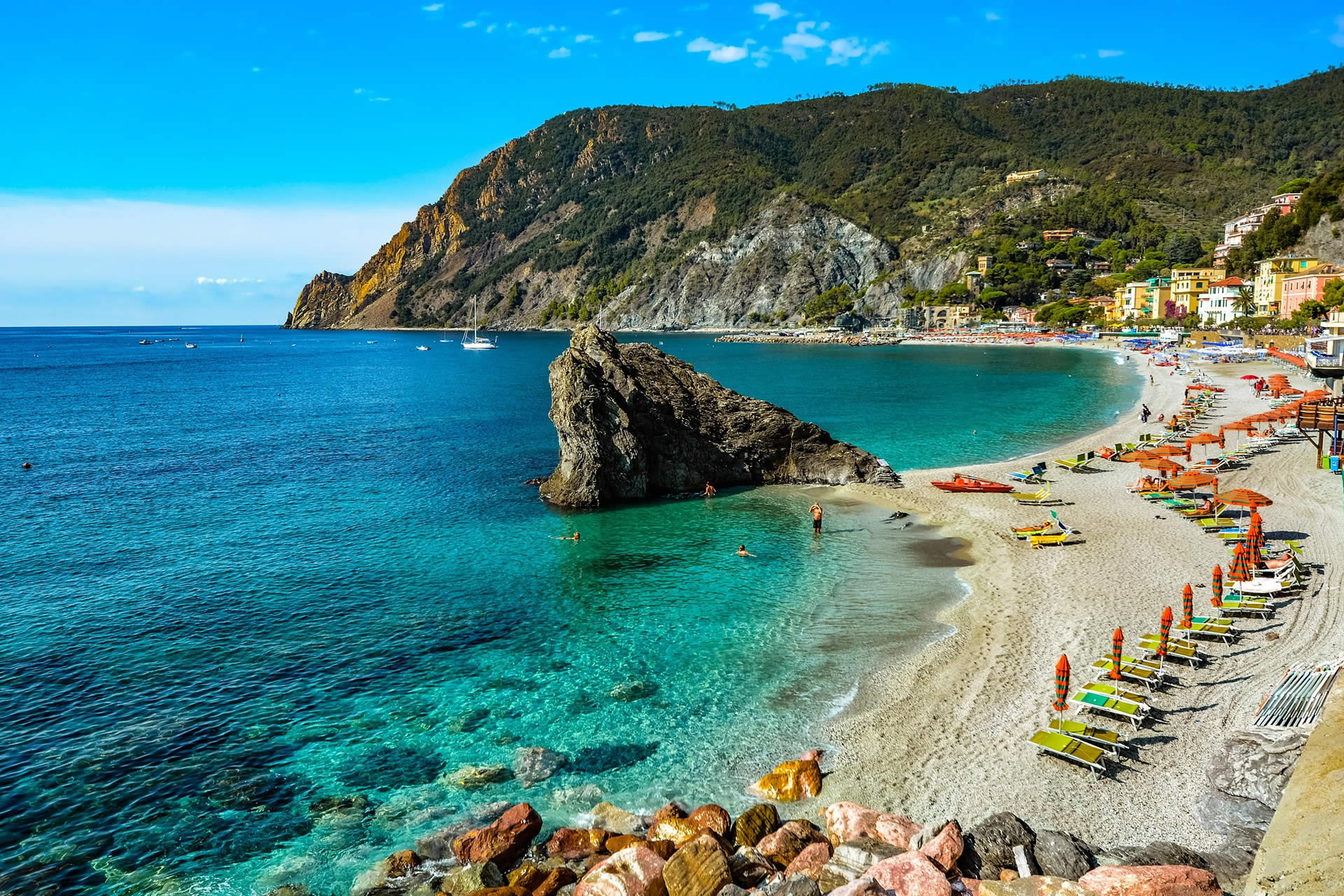
Monterosso

Monterosso is the westernmost village of the Cinque Terre and one of the most welcoming destinations on the Ligurian Riviera di Levante. The village lies at the foot of hills cultivated with vines and olive trees and is surrounded by lush Mediterranean vegetation. Its beautiful beaches, rocky cliffs and clear blue sea make Monterosso an ideal place for those who want to combine relaxation, nature and the charm of a historic seaside village. The medieval Aurora Tower, located above the Cappuccini hill, separates the old village from the modern area. In the Church of San Francesco, visitors can admire important works of art, including a Crucifixion attributed by many to Van Dyck.
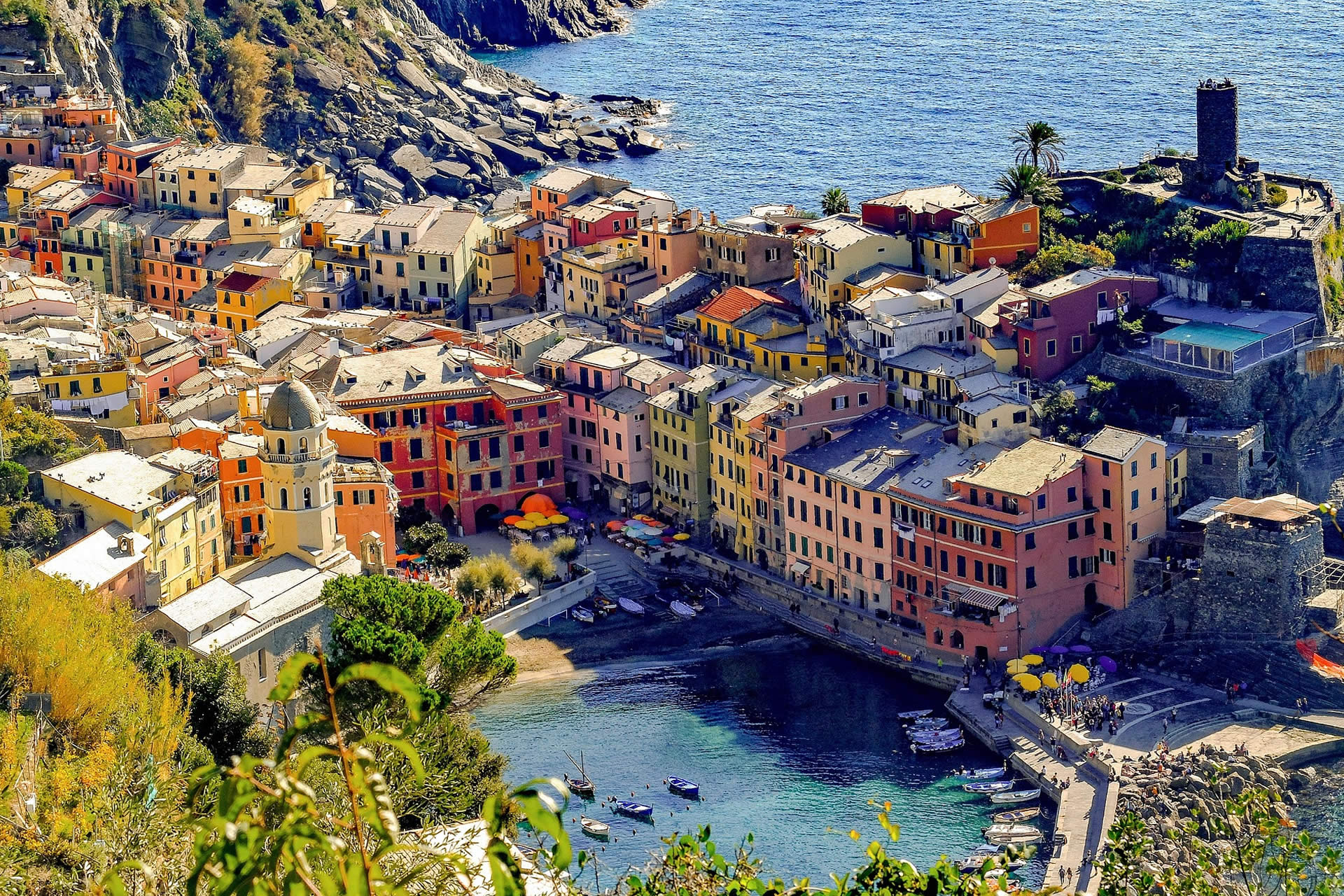
Vernazza

Vernazza is one of the most picturesque villages of the Cinque Terre, famous for its small harbour, colourful houses and strong maritime tradition. A scenic path through Mediterranean scrub and terraced cultivated land leads down to the village, offering beautiful views of the coast. Founded around the year 1000, Vernazza developed over time as an important seaside settlement. Its elegant architectural details, including loggias, arcades and stone portals, reflect the historical importance and prosperity of the village compared with the other centres of the Cinque Terre.

Corniglia

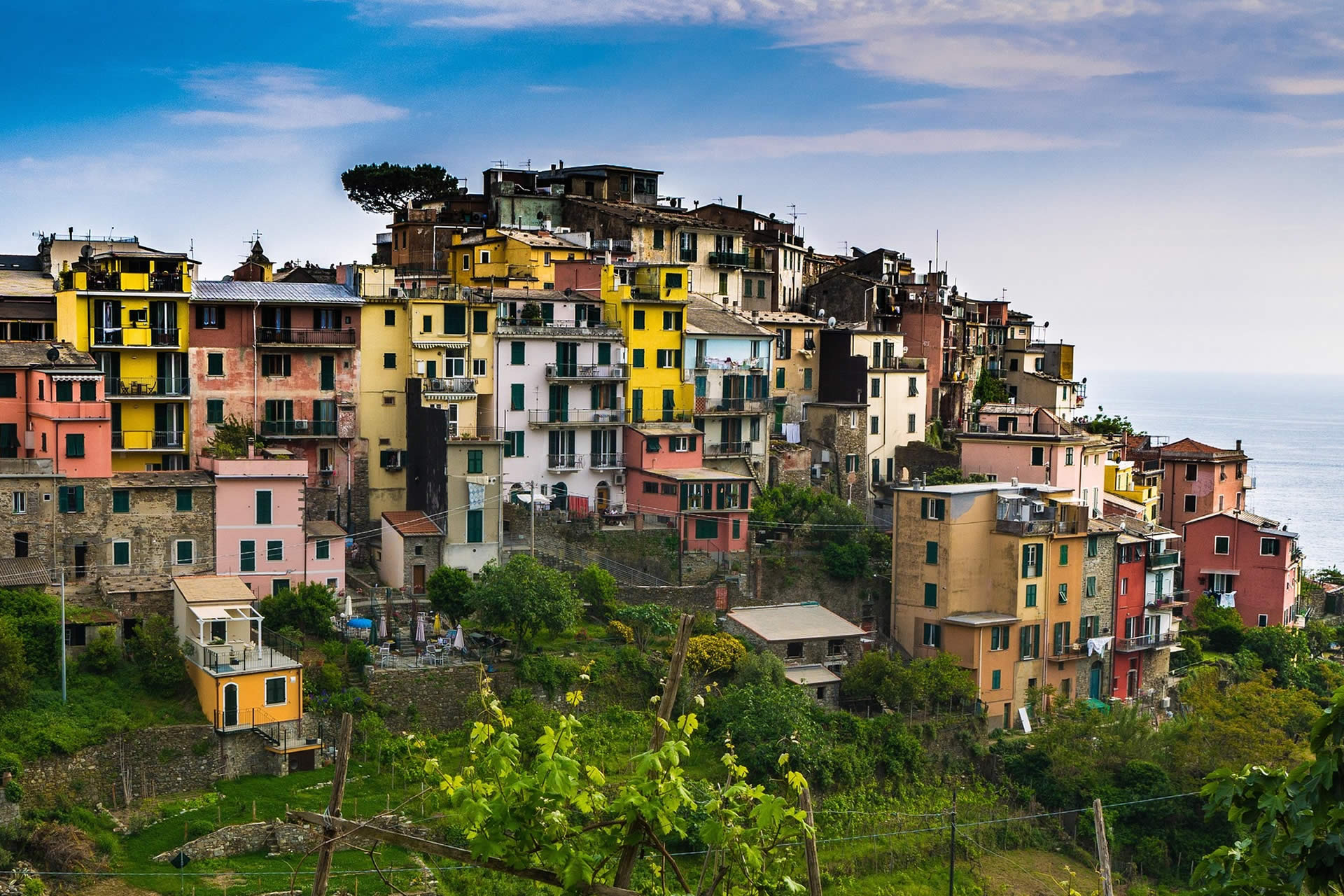
Corniglia stands on a rocky promontory overlooking the sea, surrounded by vineyards and terraced hills. Unlike the other villages of the Cinque Terre, Corniglia is more closely linked to the land than to the sea. Its agricultural character and urban layout recall the small rural villages of the Ligurian inland area. The Church of San Pietro is one of the most interesting Ligurian Gothic monuments in the Cinque Terre. Built in 1334 on the remains of an 11th-century chapel, it was later modified and enriched with Baroque elements inside. Beneath the churchyard stands a building with Gothic arches in black stone, traditionally identified as the ancient posting station of the Fieschi family.

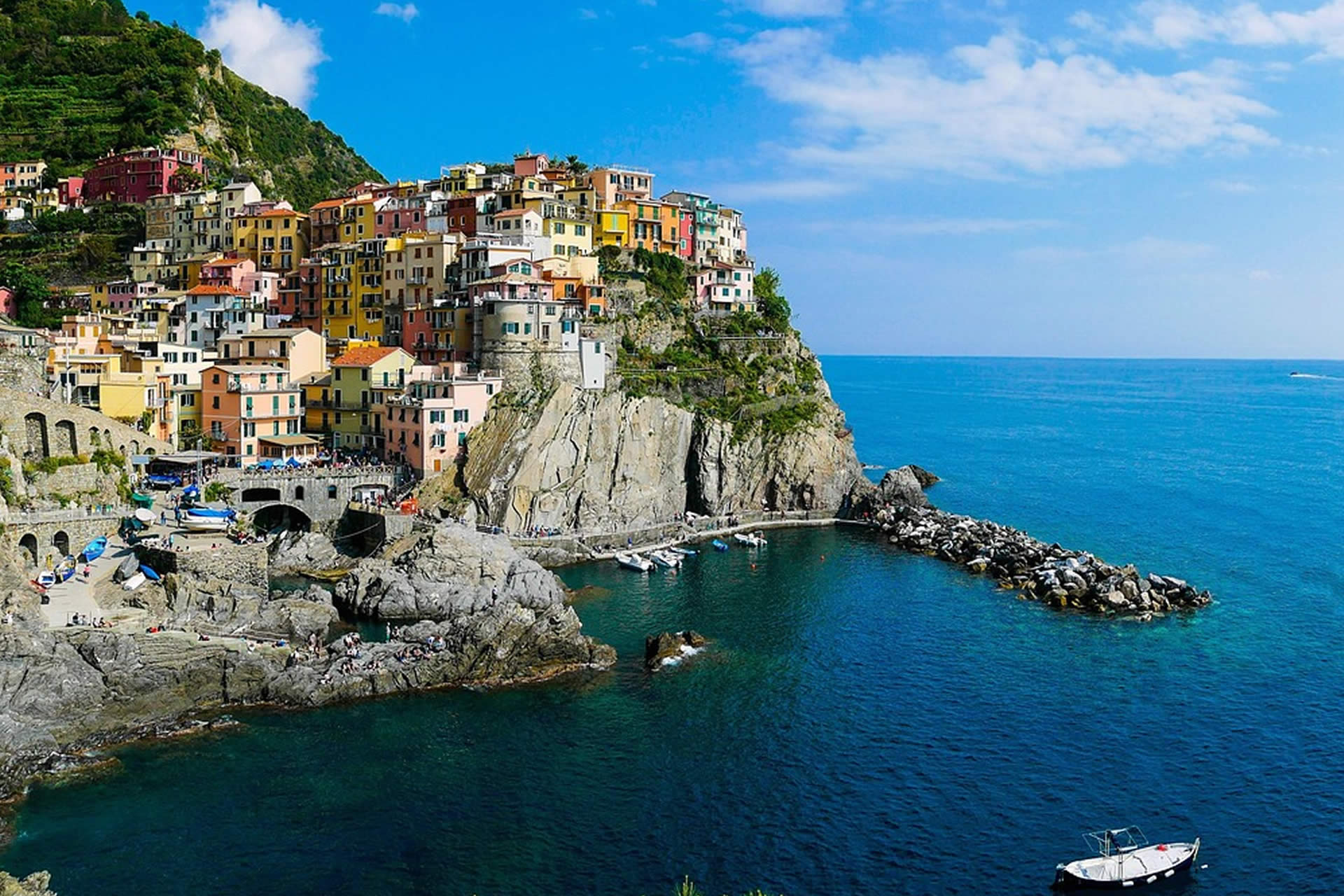
Manarola

Manarola is one of the oldest and most charming villages of the Cinque Terre, set between the sea and steep terraced hills. From Manarola begins the famous Via dell'Amore, a highly scenic pedestrian route overlooking the sea and connecting the village to Riomaggiore. The walk takes about 30 minutes and is one of the most iconic experiences in the Cinque Terre. The village has very ancient origins, although its early history is difficult to reconstruct with certainty. Above the houses, in a dominant position, stands the Gothic parish church, built in 1338. Sheltered between two rocky spurs, the small harbour is one of the most characteristic corners of Manarola.

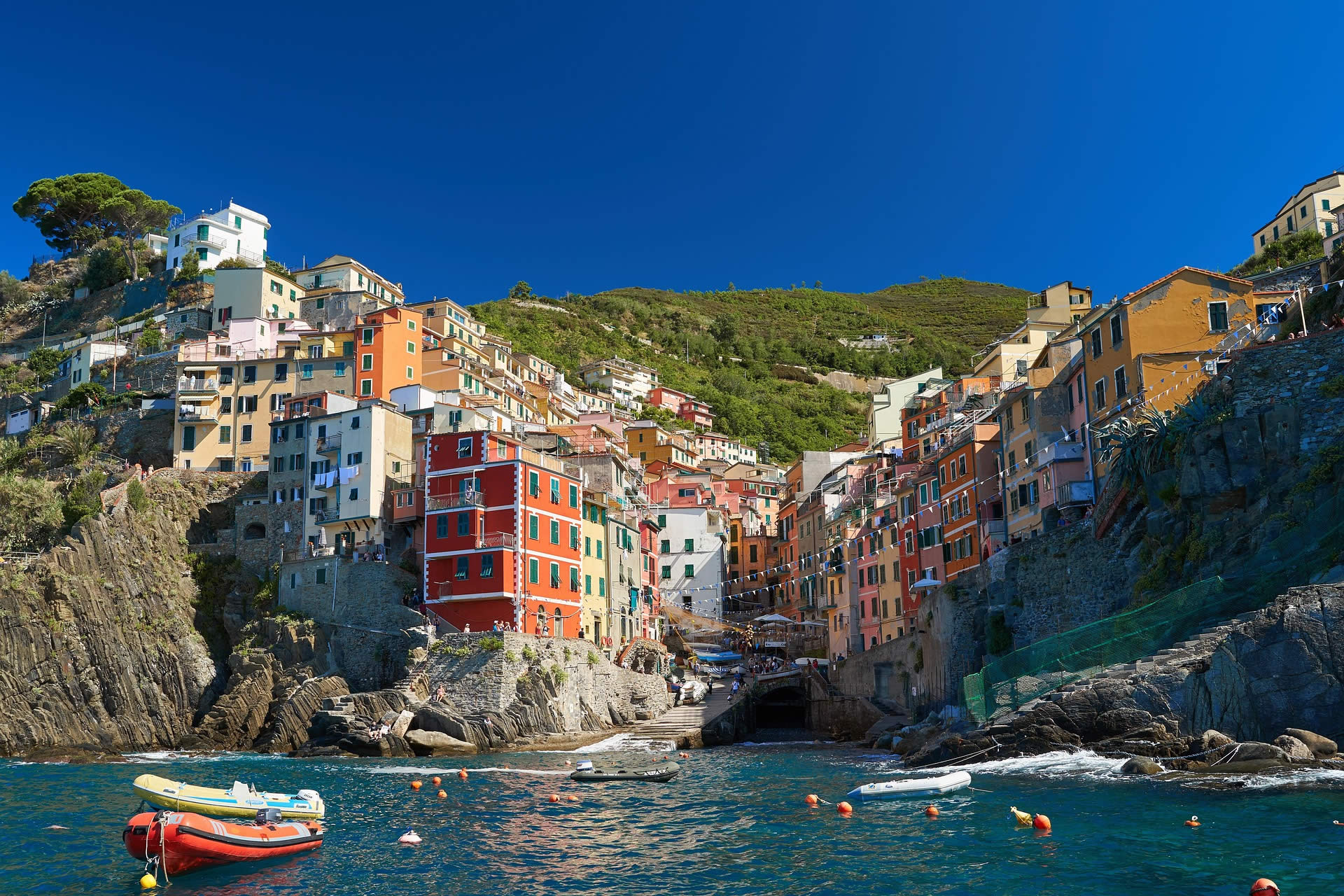
Riomaggiore

Riomaggiore is the easternmost village of the Cinque Terre and one of the most fascinating places on the Ligurian coast. According to tradition, the village dates back to the 8th century, when it was founded by Greek refugees fleeing the iconoclastic persecution of Leo III the Isaurian. The first historical records mention its passage from the Fieschi family to the Republic of Genoa in 1276. The village is built along the natural lines of the terrain, with narrow pedestrian streets and tall houses arranged in parallel rows. The oldest buildings follow the typical tower-house structure, developed vertically to adapt to the steep landscape. ...

Read more

In the upper part of Riomaggiore stands the Church of San Giovanni Battista, built in 1340 by the Bishop of Luni. In 1870, as the façade was in danger of collapsing, it was rebuilt in Gothic style. Nearby is the house where the painter Telemaco Signorini stayed several times from 1870 onwards. Many of his works portray characteristic views and scenes of Riomaggiore. From here, the route descends to the 16th-century Oratory of the Disciplinati. On the opposite side, in an elevated position, are the remains of the 15th- and 16th-century castle, later used as the old cemetery. Riomaggiore is also the starting point of the famous Via dell'Amore, the scenic pedestrian path that connects the village to Manarola.

Call us
Contact
Special offers